We’re moving! After almost 38 years in one house, we will be moving to a smaller home in a few months. Oh, my. We have an attic and basement full of the accumulation that comes with raising a family and losing grandparents and parents over decades. I’m trying to balance the desire to hold on to family memories and my readiness to be less tied to generations of material things. It’s more than a little overwhelming.
Tucked into all this, there are boxes of surprises. Things my mother packed in the Hartford Courant’s January 5, 1976 edition before a move. Two moves later she put boxes in our attic in 1995, saying “These don’t belong to you,” and she never touched them again. I’ve started unwrapping them and I’m finding finds.
Mind you, the goal here is to pare down, deaccession, simplify. But So. Much. Stuff.
If you’re reading this you already know that I’m enthralled by family stories and the things that remind us of those stories. But the sheer volume has to go. So, as I go through this tender process, I’m going to share an object and its story now and then.
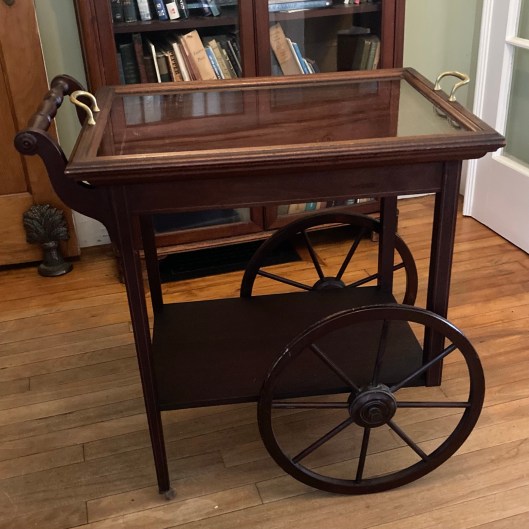
The tea cart pictured above was bought by my grandmother about 1945. My mother’s family had lived in Beirut, Lebanon, and moved to the United States when World War II ended. I remember the cart in their little house in the woods in Dover, Massachusetts throughout my childhood. A silver tea service that had belonged to Granny’s mother, Mary (Hill) Mills, sat on it.
My grandfather gave my grandmother a budget for the new household they were setting up in New Hampshire. The figure he told her was their modest total household budget for the year, but apparently Granny misunderstood. She bought a houseful of furniture, spending every bit of their year’s funds. I have no idea how they sorted that out, but the furniture stayed.
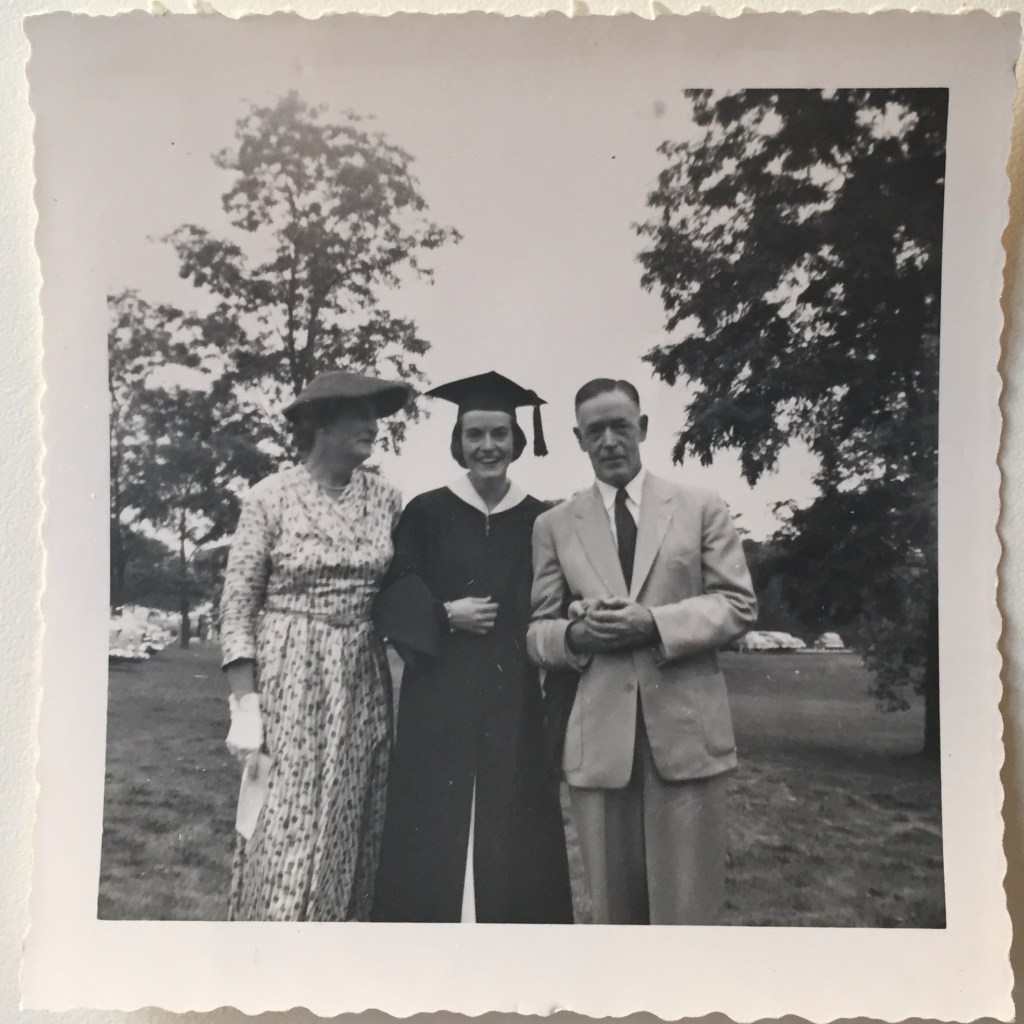
Elsie (Mills) Oliver, Celia Oliver, and Kenneth Oliver, my grandparents and mother, at Goucher College graduation, 1954.
After moving with my mum several times, the sweet tea cart has been collecting dust in my basement for several years. I’m thrilled with how it glows now, but I don’t have a spot for it when we move. It’s headed to Circus Lane, a friend’s antiques and vintage shop in search of a new home.
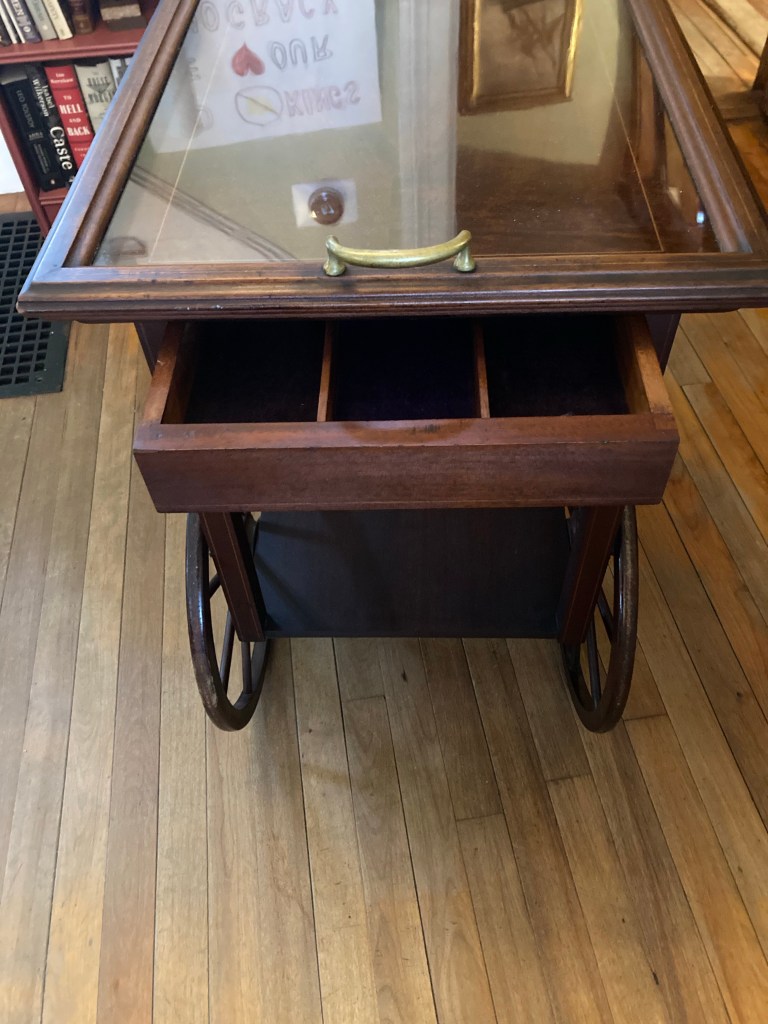
I’d never noticed the little drawer. I hope its new owner does, because I’m going to leave them a note with its story.
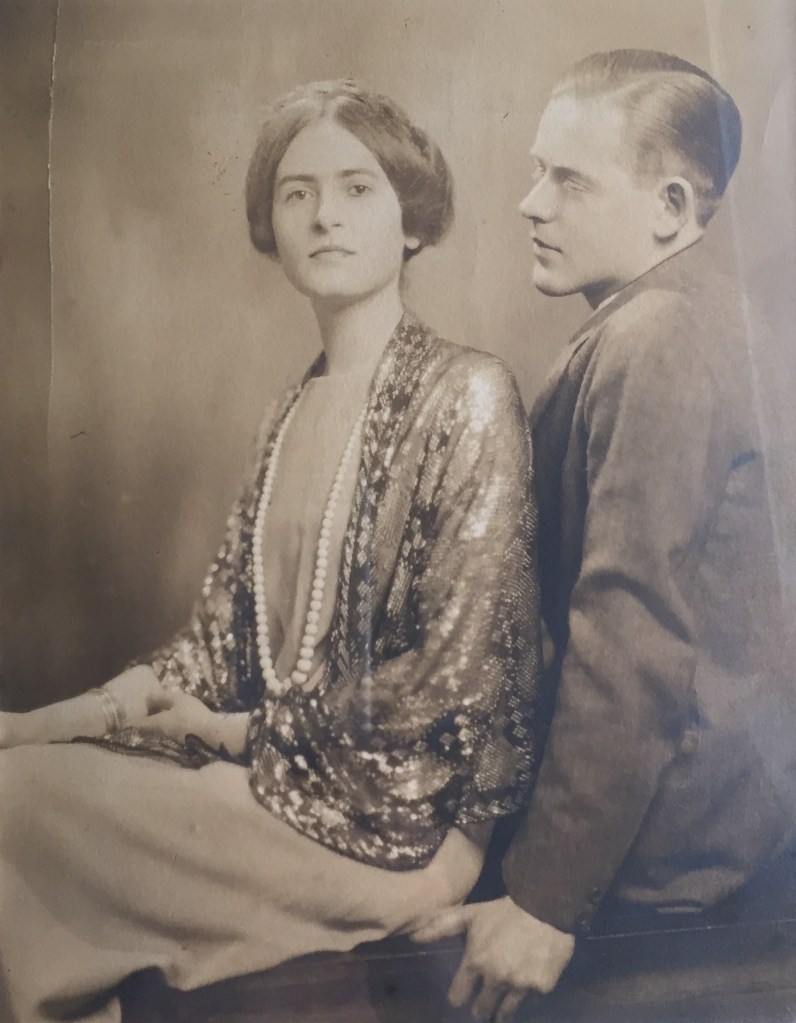
Engagement photograph of Elsie Mills and Kenneth Oliver, date unknown.
Kenneth Oliver (1898-1975) and Elsie Mills (1899-1993), my grandparents, were married 100 years ago on February 18, 1925 at the Church of St. Ignatius Loyala in Manhattan. Like so many good love stories, theirs had its twists and turns, including the classic “boy-meets-girl;-boy-loses-girl;-boy-gets-girl” plot line. It also had parental obstacles, a rival, and international adventure.
Elsie was the eldest of four children of James Mills, a physician and faculty member at Johns Hopkins University Medical School and his wife Mary (Hill). She studied art at the Maryland Institute in Baltimore, graduating in 1921 as winner of the fine art prize.
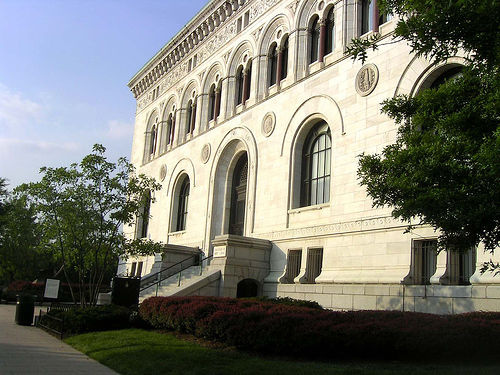
Maryland Institute, Baltimore, where Elsie Mills studied art.
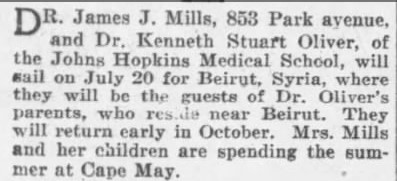
Ken graduated from Haverford College in 1920 and arrived in Baltimore later that year to study medicine at Hopkins. He must have studied with his future father-in-law that first year, because the Baltimore Sun reported on July 13, 1921 that James Mills and Kenneth Oliver were sailing to Beirut on July 20th. They visited Ken’s parents at their orphanage near Beirut, returning to Baltimore in October.
From the Baltimore Sun, 13 July, 1921
I don’t know any details of the start or early stages of my grandparents’ romance. Elsie continued her art studies and painting and Ken focused his medical studies, specializing in eye, ear, nose, and throat, his future father-in-law’s specialty. They were probably engaged sometime before the summer of 1921, but James Mills would not allow his daughter to marry Ken until he finished his residency, which was several years off. I imagine they were disappointed, but even my headstrong, free-spirited grandmother would not have disobeyed her father.
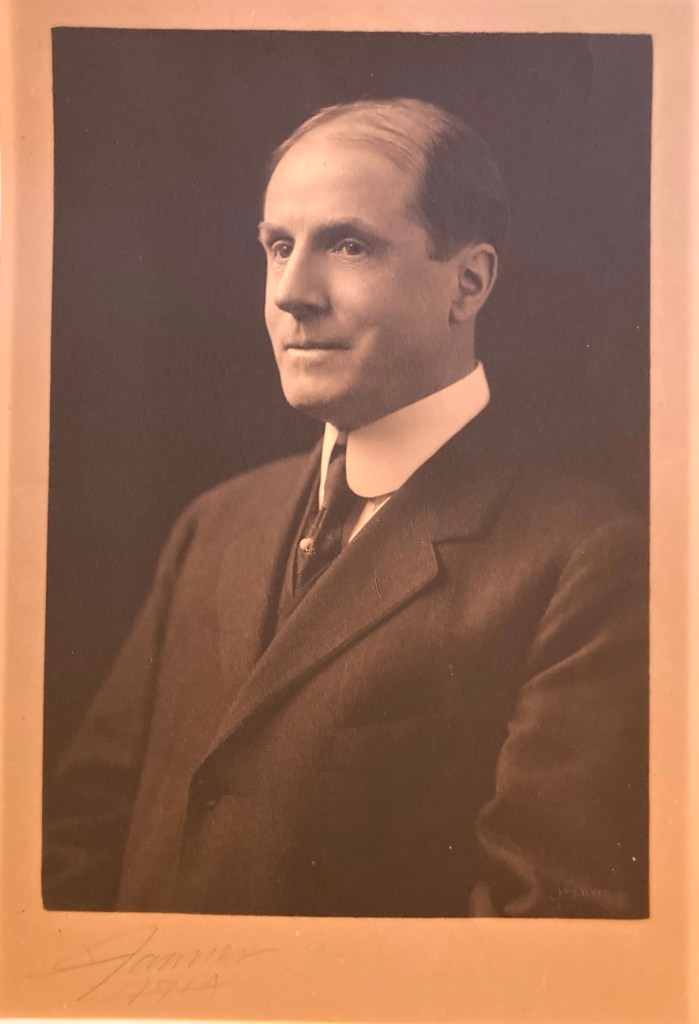
James Mills, 1914 Elsie’s father and Ken’s professor at Johns Hopkins University Medical School.
Sometime after their engagement, Ken believed he had tuberculosis. TB was highly contagious and still usually fatal, so he broke off his engagement to Elsie. She spent the summer of 1921 studying art in Woodstock, New York with Leon Kroll, George Bellows, and other major artists.
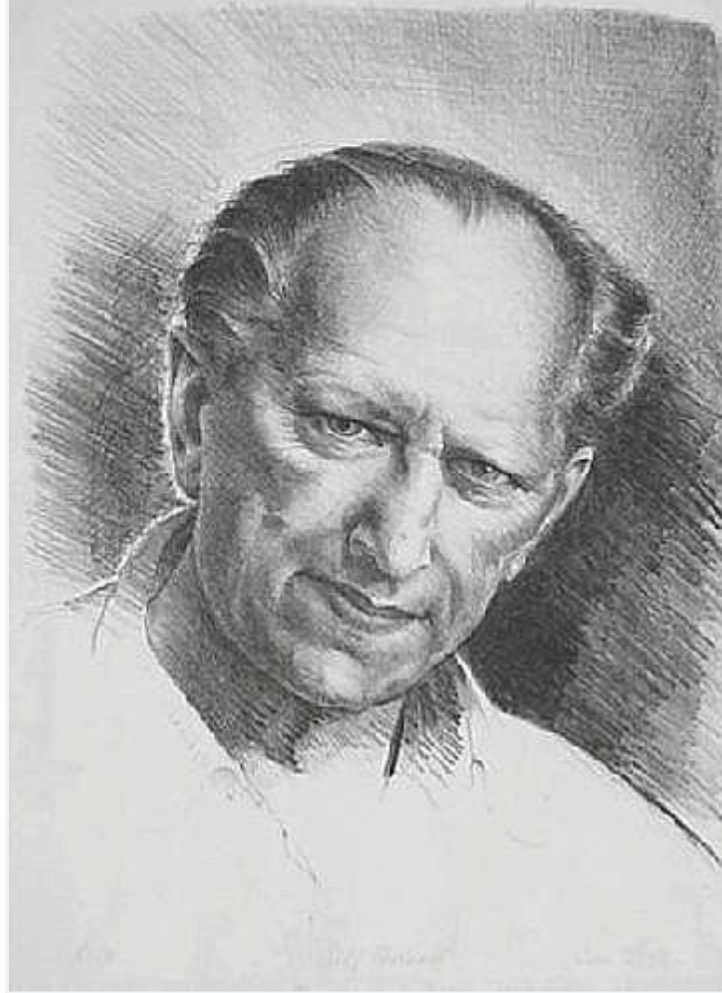
Leon Kroll, self-portrait, lithograph
Kroll (1884-1974), who had also taught Elsie at the Maryland Institute, seems to have taken a particular interest in her. He worked side by side with her, each completing a portrait of his Haitian maid that summer, and he used Elsie as a model for several of his paintings.
According to my grandmother, Kroll also asked her to marry him that summer after her engagement had been broken off. Fortunately for my grandfather and their descendants, she turned him down in order to stay true to Ken. And in classic romantic movie style, Ken turned out not to have TB, so they reconciled.
During the next several years, Ken continued his medical training and Elsie continued to study, exhibit, and teach art. Elsie’s father, James, died unexpectedly at age 61 on January 2, 1925, and the young couple seems to have wasted no time, marrying just six weeks later.
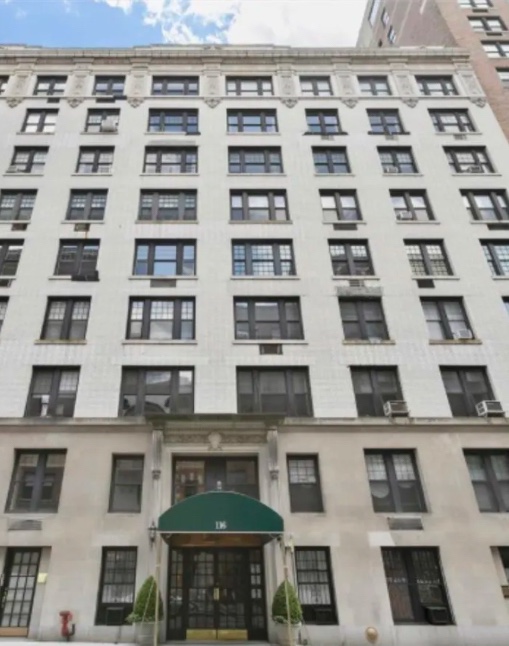
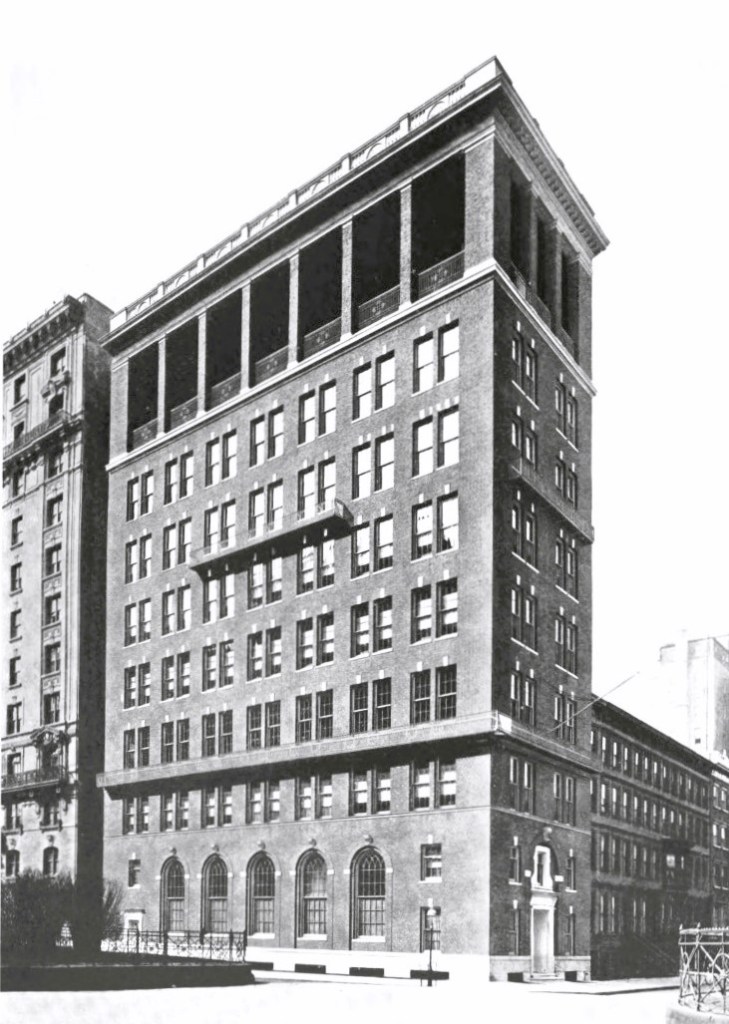
Left: 116 East 63rd Street, New York, Elsie’s apartment building in February 1925; Right: Brearley School, 60 East 61st Street, New York, where Elsie taught art. Photo credit:Daytonian in Manhattan
At the time of their marriage, Elsie was living in New York at 116 East 63rd Street. She was continuing her art studies and teaching art at the Brearley School, a prestigious private school for girls, located two blocks south at 60 East 61st Street in a building designed by McKim, Mead & White.
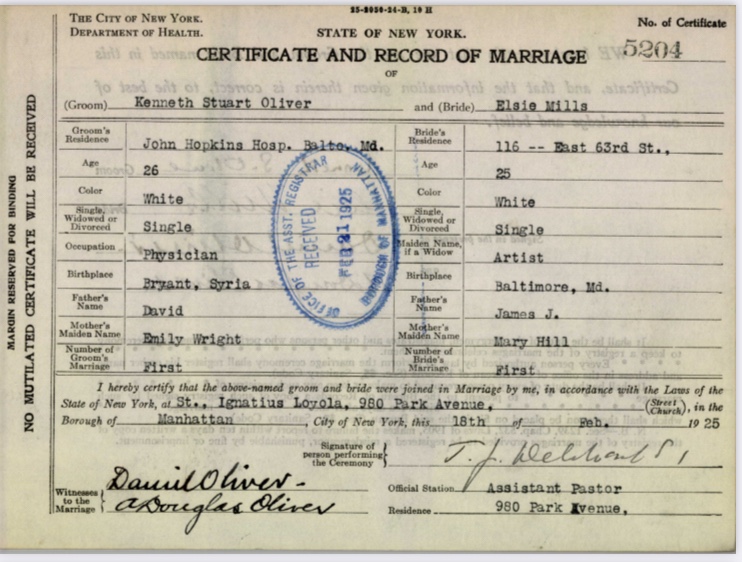
I wish it had ever occurred to me to ask my grandparents about their wedding, but it didn’t. The marriage certificate fills in a few details. Given how soon after James Mills’s death they were married, I imagine that it was a very small ceremony. The marriage certificate lists the witnesses as Daniel and A. Douglas Oliver, Ken’s father and elder brother. Daniel Oliver lived in Lebanon, but traveled occasionally to the United States for his work. It is possible that the wedding was the first time Daniel met his new daughter-in-law.
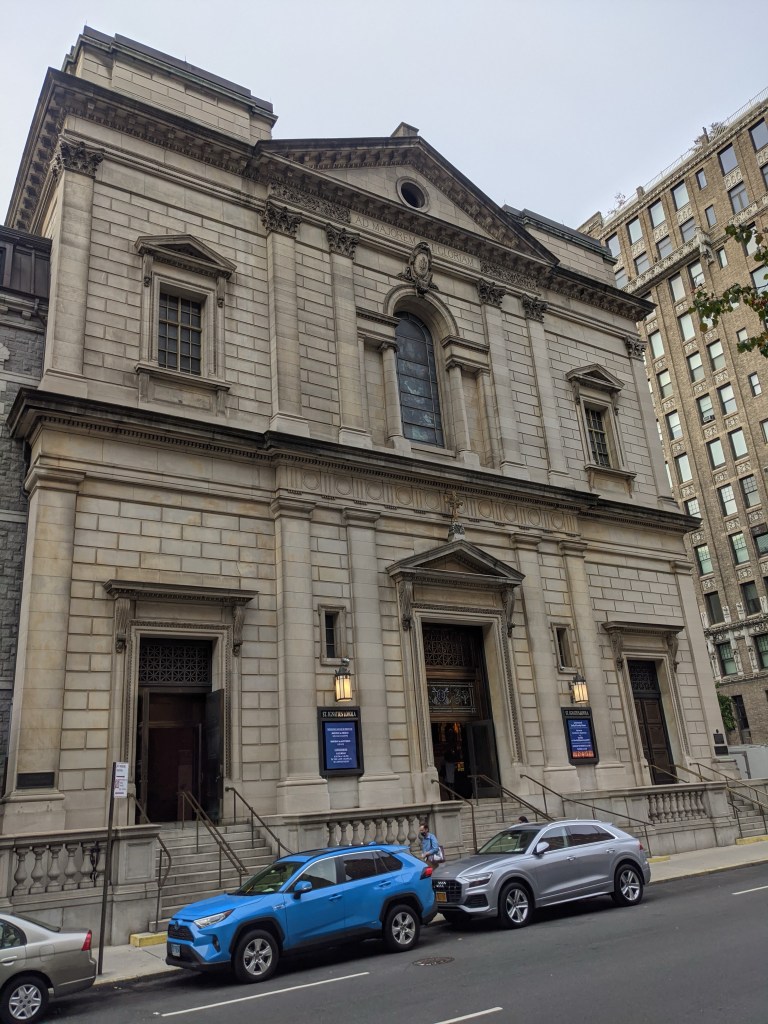
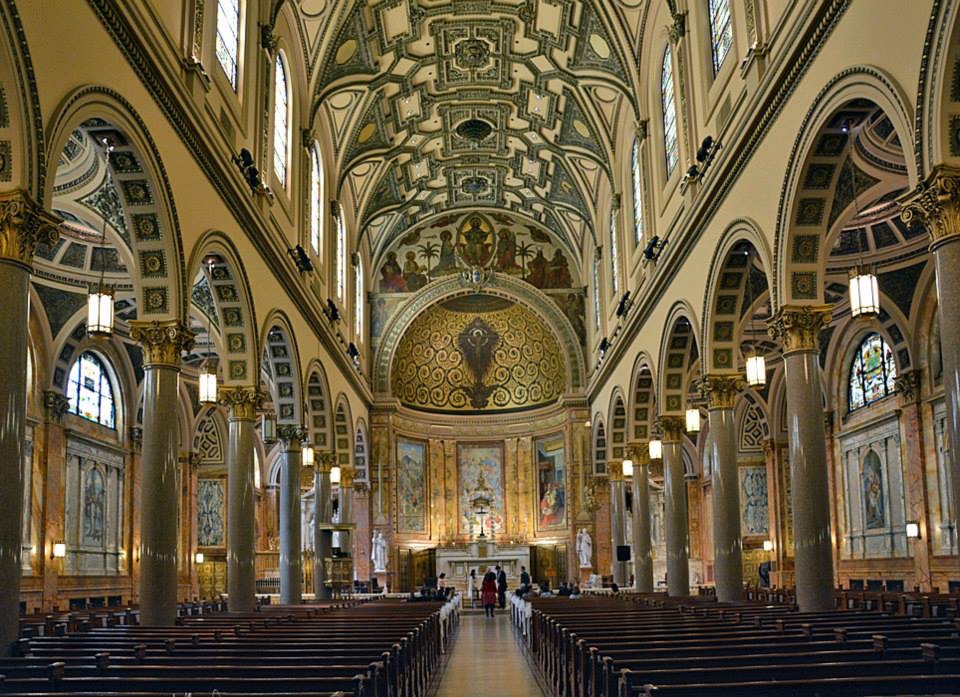
Ken and Elsie were married at the Church of Saint Ignatius Loyola at 980 Park Avenue in Manhattan. An imposing edifice built from 1895-1900, it was the scene of many high profile occasions such as the funerals of Jacqueline Kennedy Onassis, Lena Horne, Oscar de la Renta, and Mario Cuomo. It was also the filming location for the funeral of Logan Roy, central character in the recent streaming series, Succession.
Following their marriage and a honeymoon in Atlantic City, New Jersey, Ken and Elsie settled back in Baltimore in an apartment on Eutaw Place. Elsie’s newly widowed mother sold the family’s house and moved with her twenty year old son, Jimmy, to an apartment across the street from Ken and Elsie. Ken continued his medical training at Hopkins and Elsie continued to paint. In January 1926 she had a one-woman painting exhibition at the Maryland Institute.
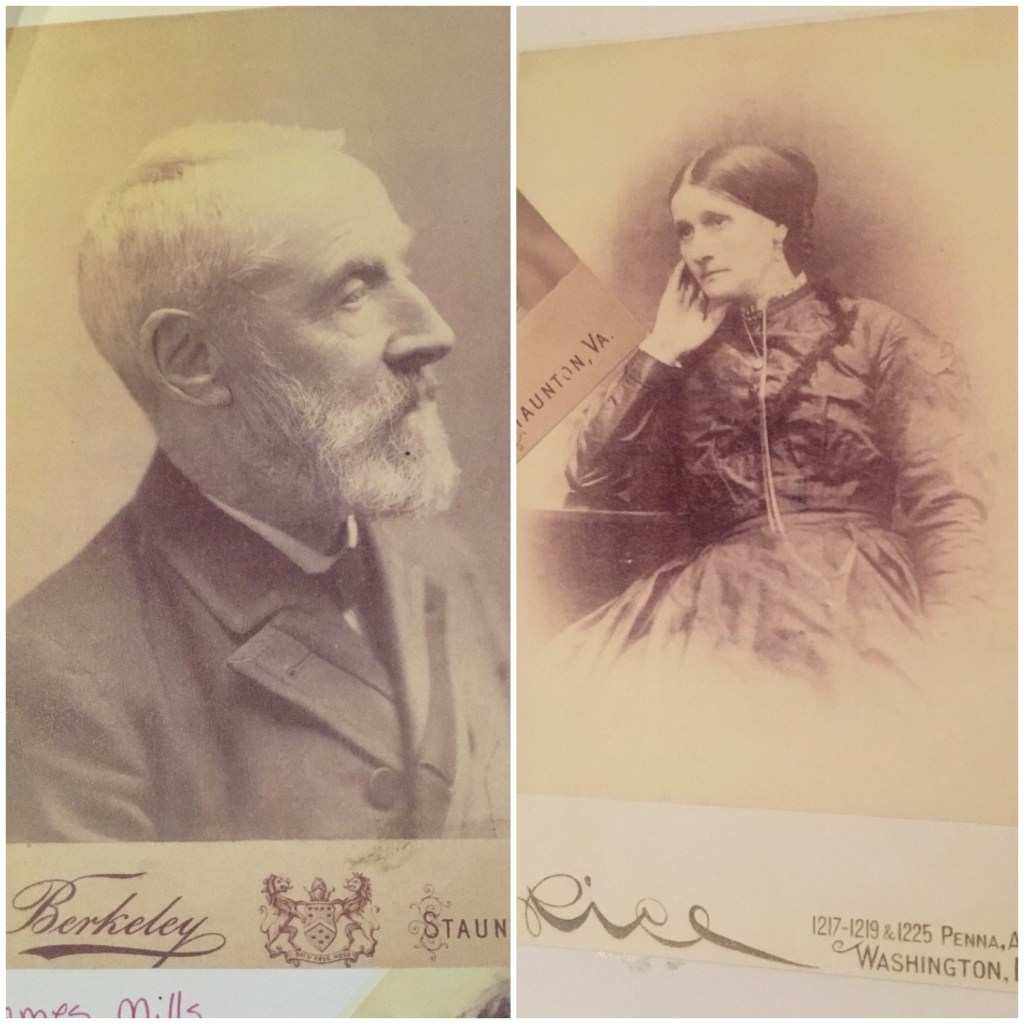
James and Maria (Milnes) Mills
Coincidentally, Elsie and Ken shared their anniversary with Elsie’s paternal grandparents. James Mills (1824-1904) married Maria Milnes (1825-1892) 180 years ago on February 18, 1845 at St. Werburgh’s Church in Derby, England. And the 200th anniversary of Maria’s birth in Gloucester, England just passed on March 19th. So many milestones!
Relationships
James and Maria (Milnes) Mills, 2nd great grandparents
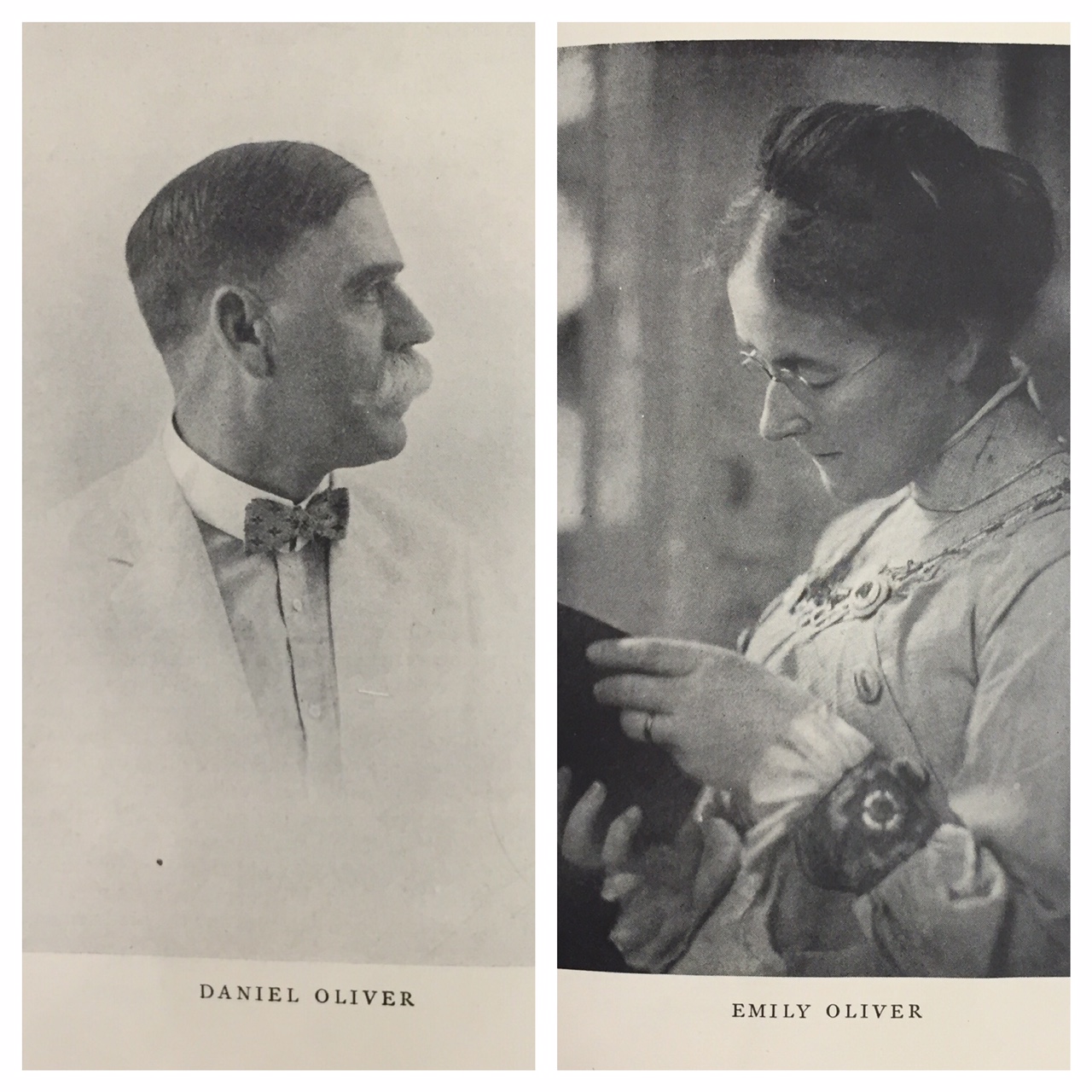
My great grandparents, Daniel and Emily, have always been the most colorful and compelling characters in my family history. I am lucky to have grown up on their stories, to have photos of them, and to have found a rich trove of their papers. And yet, there are so many unanswered questions…Today I wish them happy anniversary.
Daniel Oliver (1870-1952), an adventurous young Scotsman, left Thurso in Caithness in the northernmost part of the Scottish Highlands when he was a teenager. He was the youngest of three brothers, and came from a family of farm laborers who moved south to work on the docks in Edinburgh after Daniel left Scotland. He travelled to Morocco, where he did missionary work, and then in the early 1890s to Palestine and Beirut, where he studied Arabic. Soon he made his way to Brummana, Syria (now Lebanon), where he taught at the Quaker mission school that was founded there in the 1870s.
What ever possessed him to leave home so young? How did he become a missionary? His family was not particularly religious. What were those years on the road like? Did he travel alone or with companions? And how did a boy from such a modest family grow into such a commanding figure of a man? He didn’t speak to his children or grandchildren of his background. Did he cut off all ties with his family? Why?
Emily Wright (1865-1954) was born in Ackworth, Yorkshire, and was an adventurous young woman in her own right. She was the daughter of Mary Ann (Deane) and Alfred Wright, a Quaker missionary, and came to Syria with him when she was in her 20s. I don’t know where Alfred went from there, but Emily stayed to teach in Brummana, finding a calling that she would continue for the rest of her long life.
What must it have been like to leave England at 25 and start life on an unfamiliar continent? The school was supported by Quakers from England and the United States. Did she know any of the faculty when she arrived? Were there friends of her father’s? Teachers from home? Did her father stay there with her for long, or did he continue on with his travels soon?
I wish there were letters or clues to Emily and Daniel’s courtship, but I don’t know of any. In my imagination I see two young, idealistic people with a deep commitment to making the world a better place through their faith and their teaching. Daniel was a strong and perhaps blustery man with an iron will and a powerful ambition. Emily was unwavering. She was his partner for sixty years, first at the school in Brummana, where he eventually became principal, and then at the Daniel and Emily Oliver Orphanage and School in nearby Ras el Met’n. There they supported, educated and provided work skills for hundreds of children through two World Wars and beyond.
On September 19, 1895, one hundred twenty-one years ago today, Daniel and Emily were married at the Friends Meetinghouse at Stoke Newington, London. I wish I knew whether they had any family or friends with them that day. With the exception of Emily’s mother, their parents were all still living at the time. Was Alfred Wright there? Emily was close to her sisters and brothers, so I picture them with her at the meetinghouse. David and Esther Oliver, along with Daniel’s older brothers, John and David, were living in Edinburgh. Did they make the trip?
Daniel and Emily had been married for 57 years when Daniel died in 1952. Emily’s death followed in 1954. They had four children, (including my grandfather, Kenneth), seven grandchildren (including my mother, Celia), at least six great grandchildren, and at least twelve great great grandchildren. They also touched the lives of untold numbers of children they taught and cared for during their sixty years in Lebanon.
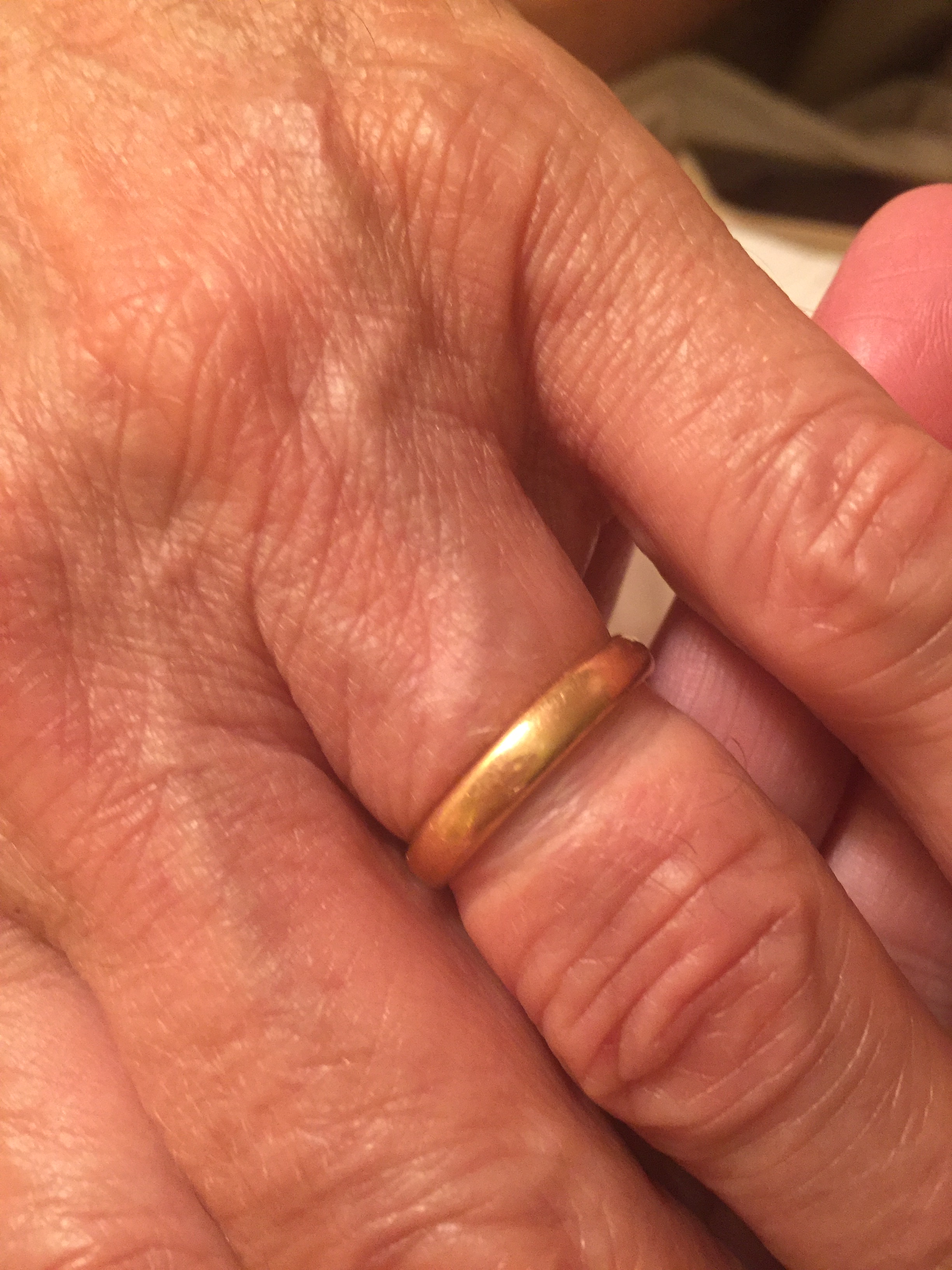
Daniel’s wedding ring is inscribed D + E 19th Sept. 1895. My husband wears it now with the added inscription KW to LJB 1-2-82.
And a very happy first anniversary today to another Emily–Daniel and Emily’s great great granddaughter–and her husband Matt!
My mum is torturing her big brother (sorry he’s missing from the photo) with my grandmother, Elsie (Mills) Oliver, looking on, and sister, Alison, on the left. A moment of silly, spontaneous kid-ness.
My mother’s British/American family lived in Lebanon for three generations. My great grandmother, Emily Wright, traveled from England to Lebanon with her Quaker missionary father, Alfred, in the early 1890s.There she met and married Daniel Oliver, a strong-willed, stubbornly independent Scotsman from the farthest reaches of the Highlands. They spent the rest of their lives in Lebanon (more in later posts!)
My grandfather, Kenneth Stuart Oliver (I always like the sound of his full name), and his two brothers were sent to Pennsylvania as children to be safe from unrest in the Middle East and be educated. While his brothers, Douglas and Hugh, stayed in the U.S., my grandfather returned to Lebanon in the 1920s after finishing medical school and marrying my Baltimore-born-and-bred grandmother. He was a physician and faculty member at the American University of Beirut.
My mum and her siblings lived in Beirut and spent summers in the mountains of Lebanon until they left for the U.S. in 1945. This photo must have been taken soon before the outbreak of World War II disrupted their lives dramatically, and eventually led them to leave the country.




 Generations of Nomads